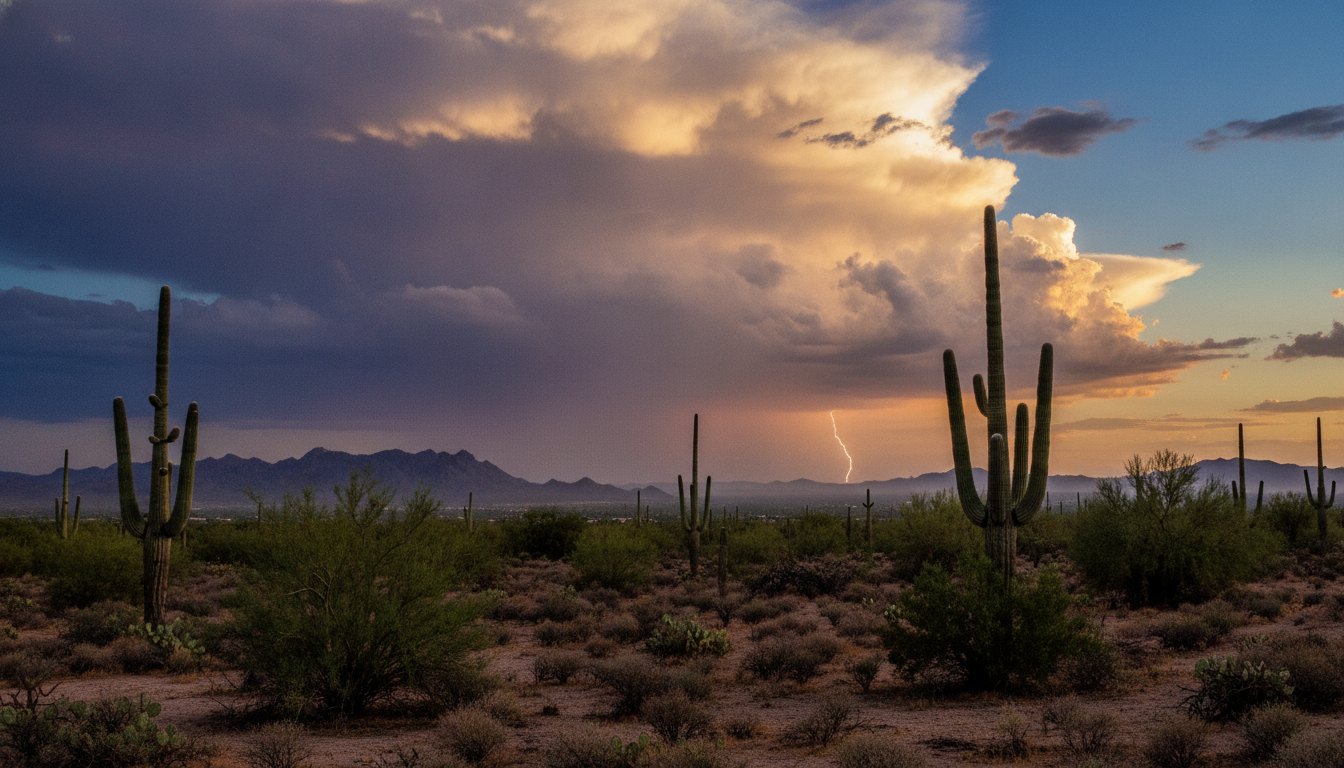
Monsoon Season Is Real Out Here
From June through September, the Northwest Phoenix Valley gets hit with the full force of Arizona's monsoon: violent microbursts, blowing dust storms (haboobs), hail, and sudden downpours. Every year, NW Valley homeowners file claims for roof damage, downed trees, broken windows, and flooded property. The question is — when the storm hits your home, are you actually covered?
What's Typically Covered
Most standard homeowners policies cover these monsoon perils:
- Wind damage — torn shingles, lifted roofs, downed fences and trees
- Hail damage — to roofs, skylights, vehicles (under auto), and exteriors
- Wind-driven debris — dust and objects that break windows or siding
- Lightning — fire and power-surge damage to your home and systems
- Fallen trees — damage to your home or other structures
The Big Gap: Flood Is NOT Covered
Here's what catches homeowners off guard: standard homeowners policies exclude flood. When monsoon rains overwhelm a wash or cause water to rise and enter your home from the ground, that's flood — and it's not covered unless you have a separate flood policy. Many NW Valley properties sit near desert washes that can run hard during a big storm. If that's you, a flood policy may be worth it.
Where Claims Get Complicated
- Roof age and settlement. Older roofs may be settled at actual cash value (depreciated) rather than full replacement — a big difference after hail.
- Maintenance vs. storm. Insurers distinguish sudden storm damage from long-term wear; good documentation helps.
- Other structures. Barns, detached garages, and outbuildings need adequate limits, which basic policies often shortchange.
Get Ready Before the Storm
- Review your dwelling and roof coverage before monsoon season, not after.
- Photograph your home and roof now, so you have a baseline for claims.
- Ask about flood if you're near a wash or in a low spot.
- Know your deductible, including any separate wind/hail deductible.
As your local Wittmann agency, we review your policy for Arizona storm reality and tell you plainly where you stand — including whether you need flood coverage. [Get a free quote or policy review](/quote) before the next big storm.